

The Balkans in June: Croatia, a route to travel before the crowds arrive
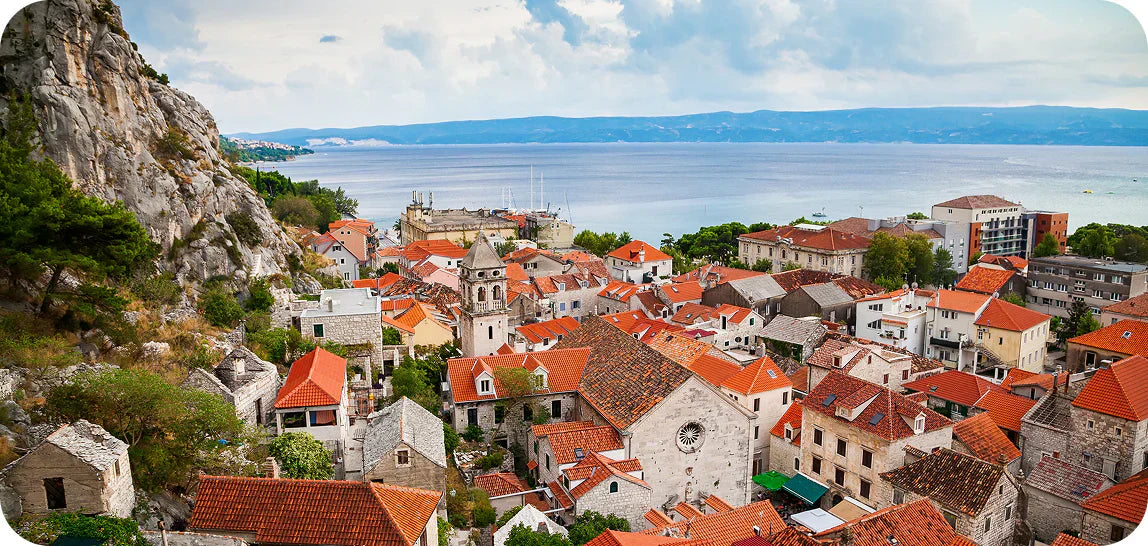
Croatia in June offers something that summer doesn't always allow for: space. ✨ Space to walk without rushing, to gaze at the Adriatic Sea 🌊 without fighting for a photo, to explore historic cities 🏰 without feeling like everyone arrived at the same time.
☀️ While many think of Croatia as a peak summer destination, June has a special charm: the weather is already warmer, days are long, coastal routes are gaining popularity, and it's still possible to enjoy the country before the most intense peak of July and August.
🚢 It's an ideal month to combine historic cities, natural parks, ferries, islands, and a few days by the Adriatic without feeling the full pressure of high season yet.
✈️ If you're thinking of traveling from Colombia to Croatia, this guide helps you focus on what's important: flights, entry requirements, agencies, accommodation, internal transport, useful apps, and a proposed 7-day itinerary to discover one of the most fascinating destinations in the Balkans.
📍 What you'll find in this blog
- ☀️ Why travel to Croatia in June?
- ✈️ Flights from Colombia
- 🎟️ Tour packages and agencies
- 📋 Requirements for Colombians
- 👨👩👧👦 Where to stay
- 🚌 How to get around Croatia
- 🍽️ What to eat during the trip
- 🗓️ Recommended 7-day itinerary
- 📱 Useful apps for planning your trip
- 📶 Internet in Croatia
- 🌟 Is Croatia in June worth it?
☀️ Why travel to Croatia in June?
June is that sweet spot that many travelers appreciate. You're no longer in winter, but not yet in the most intense season of the European summer. In Dubrovnik, for example, maximum temperatures usually rise from around 20 °C to 24 °C, creating ideal conditions to explore the old city 🏰, climb to viewpoints 📸, or walk along the famous walls without the suffocating heat of July and August.
🌊 That said, June should not be seen as a "guaranteed summer". There can be sunny days, perfect afternoons to admire the Adriatic Sea, and even moments to enjoy the beach, but the water can still feel cold for those who dream of spending hours swimming.
✨ The best way to look at it is this: June is perfect for discovering a more cultural, more photogenic, more natural, and less crowded Croatia. It's the ideal time to enjoy the landscapes, historic cities, and coastal routes with more tranquility.
📅 It's also worth noting that there are some national holidays during this month, such as June 22 and 25, so it's a good idea to check transportation schedules, museums, parks, and shops in advance before finalizing your itinerary.
✅ Pleasant weather for walking
✅ Better prices than in peak summer
✅ Easier to find accommodation
✈️ Flights to Croatia from Colombia
Croatia is not usually a destination with direct flights from Colombia, so most routes include one or more layovers in European cities. Therefore, rather than looking for "the perfect flight," the key is to carefully compare entry and exit airports to optimize time and budget.
Zagreb
Ideal for starting your trip. Allows you to combine the capital with Plitvice Lakes and the Croatian coast.
Split
Excellent base for exploring islands, enjoying the Adriatic, and touring the Dalmatian coast.
Dubrovnik
The country's most iconic city. Perfect for ending your trip among medieval walls and unforgettable views.
🌍 For a 7-day trip, the most practical entry points are usually Zagreb, Split, and Dubrovnik. Each offers different advantages depending on the type of itinerary you want to follow.
💡 A trick many travelers use to save time—and sometimes money—is to book multi-destination flights. For example, entering through Zagreb and departing from Dubrovnik, or starting in Split and returning from Dubrovnik. This avoids long land transfers just to catch a return flight.
🔎 To find better fares, it's worth using comparison sites like Skyscanner, setting up price alerts, and taking advantage of flexible date searches. Tools like "whole month" allow you to quickly identify the cheapest days to travel and compare different arrival cities within Croatia.
🗺️ Recommended 7-day itinerary
Zagreb
Day 1Explore the Croatian capital.
Plitvice
Day 2Turquoise lakes and waterfalls.
Split
Days 3-4Diocletian's Palace and Dalmatian coast.
Hvar or Brač
Day 5Adriatic islands excursion.
Dubrovnik
Days 6-7Medieval walls and unforgettable views.
💡 Traveler Tip: look for multi-destination flights. Entering through Zagreb and departing from Dubrovnik often saves time and avoids unnecessary road trips.
🎟️ Where to buy tour packages or flight + hotel?
If you prefer to travel with more support, you can check agencies like Aviatur, especially if you're looking for a more personalized package or a route that combines Croatia with other European countries. There you can find circuit options, complete packages, flight + hotel deals, and advice for planning your trip.
It's also worth comparing platforms like Despegar or Viajes Falabella, especially if you're looking to quickly book a flight + hotel combination and view prices in Colombian pesos.
For excursions, guided tours, and day activities, platforms like Civitatis can be an excellent complement to complete your itinerary.
💡 The most realistic recommendation is simple: if it's your first time in Croatia and you don't want to worry about all the logistics, an agency can give you a lot of peace of mind. If you already have experience traveling in Europe, you can probably organize the trip yourself using flight, accommodation, and internal transport comparison sites.
📋 Entry requirements for Colombians
The Delegation of the European Union in Colombia also recommends traveling with the necessary documentation, including a valid passport, round-trip ticket, accommodation bookings, sufficient financial resources, and travel medical insurance. ✈️🛂🏨💳🩺
🌍 To avoid confusion: Croatia is part of the Schengen area, so those 90 days are not "90 days only in Croatia," but within the total allowed for the Schengen area. If you're combining Croatia with Spain 🇪🇸, Italy 🇮🇹, France 🇫🇷, Slovenia 🇸🇮 or another Schengen country, everything counts towards the same total.
🛂 Another important point for travel in 2026 is the EES, the new European Entry/Exit System. From April 10, 2026, the EES replaces manual passport stamping and records data such as travel document, entry and exit dates, facial image, and fingerprints of non-EU travelers.
📅 Regarding ETIAS, you don't need to do any paperwork before traveling yet. The European Union plans for this travel authorization to be implemented in the last quarter of 2026, although the exact date will be officially announced later. Therefore, if you are planning your trip for late 2026 or beyond, it is advisable to check the official information before buying tickets or making reservations.
👨👩👧👦 Where to stay in Croatia if you're traveling with children or family
Croatia offers many ways to experience it, but if you're traveling with children, it's wise to choose comfortable bases, not just "pretty" places.

🏖️ Split is one of the best options for families because it combines a historic center, promenade, nearby beaches, island excursions, and alternatives for quieter days. Plus, it allows you to move to other points without changing hotels every night.
🏰 Dubrovnik is spectacular, but it can be intense if you stay within the old city: stairs, narrow streets, high prices, and a lot of activity. If you're traveling with children, it might be better to look for accommodation in areas like Lapad or Babin Kuk, which are usually more comfortable for families and allow you to visit the historic center without necessarily sleeping amidst the tourist flow.
🌊 Rovinj, on the Istrian peninsula, is also a good alternative if you're looking for a slower-paced, family-friendly, coastal Croatia. And Zadar can work very well for those who want a more relaxed base, with a good location for exploring parks and the coast.
🔑 For booking, Booking.com is practical for its family, cancellation, and location filters; Airbnb works well if you need a kitchen or more space; and local platforms like Adriatic.hr can be useful for private apartments on the coast.
🚌 How to get around Croatia without a car
The good news: you don't need to rent a car for everything. The bad news: if you want to move quickly between certain parks, towns, and islands, you'll need to plan very carefully.
🚍 For inter-city travel, the bus is usually one of the most useful options. Operators like Arriva and FlixBus connect many routes within the country, especially between Zagreb, Split, Zadar, Dubrovnik, and areas near parks. For the islands, the ferry or catamaran ⛴️ is a natural part of the journey. Jadrolinija, for example, allows you to check schedules and buy tickets online for multiple maritime routes within Croatia.
Bus
Ideal for traveling between Zagreb, Split, Zadar, and Dubrovnik.
Ferry
The best option for visiting Hvar, Brač, Korčula, or Mljet.
Car
Recommended for exploring small towns and natural parks.
🏝️ If you want to visit islands like Hvar, Brač, Korčula, or Mljet, check schedules in advance, especially if you're traveling outside of peak summer. In June, routes are available, but some frequencies may be lower than in July or August.
🚗 Is renting a car worth it? Yes, if you want to visit places with more freedom, sleep in small towns, or combine natural parks with the coast. Not so much if your route will be Zagreb, Split, Dubrovnik, and major islands, because you can manage a lot there with bus, ferry, and walking. 🚶♂️🌊
🍽️ What to eat in Croatia during your trip
Croatia is also discovered through its cuisine. In Zagreb, it's worth trying štrukli, a dough filled with fresh cheese that can be baked or boiled; it's a simple, local, and very typical dish. To try them, a good option is La Štruk, and if you're looking for more traditional Croatian food, you can check out Vinodol.

Štrukli
The most traditional specialty of the Croatian capital.

Peka
Slow-cooked under embers, typical of the region.

Black risotto
One of the most representative dishes of the Dalmatian coast.

Oysters from Ston
One of the most famous flavors of the Adriatic.
🥩 In the Plitvice area, the cuisine is more mountainous: slow-cooked meats, potatoes, local cheeses, and dishes prepared peka style, a traditional technique under embers. Near the park, Lička Kuća is a consistent option for tasting regional flavors.
🦐 In Split, the plan is to indulge in Dalmatian cuisine: fresh fish, seafood, black risotto, pašticada —slow-cooked meat with sauce and gnocchi— and soparnik, a savory chard and onion pie. For a local meal, you can look at options like Konoba Fetivi or Villa Spiza.
🐙 And in Dubrovnik, the must-tries are from the sea: fish, octopus, Ston oysters, brodet —fish stew— and desserts like rožata, similar to a flan. For dining within the old city, you might consider Proto, Kopun, or, if you want a more special dinner, Nautika.
✨ The final recommendation: book in advance in Split and Dubrovnik, but leave room for improvisation. Sometimes the best food appears in a small konoba, with fresh fish, bread, olive oil, and a view of the Adriatic. 🌊🍷🍽️
🗓️ Suggested 7-day Croatia itinerary in June
For a first trip, it’s best not to try to see everything. Croatia may look small on the map, but between roads, ferries, hikes, and hotel changes, fatigue sets in quickly. This route aims for balance.
📅 Day 1: Arrival in Zagreb 🏙️
Start with a quiet night in the capital. Zagreb doesn't have the fame of Dubrovnik, but it's a good entry point to the country: walkable, less overwhelming, and perfect for acclimatizing after your flight. You can explore the Upper Town, leisurely enjoy ☕ coffee, and prepare for your departure to Plitvice.
📅 Day 2: Plitvice Lakes National Park 🌲💦
This is one of Croatia's most famous landscapes, and for good reason. The park is renowned for its lakes, waterfalls, and walking trails, and is considered the oldest and largest national park in the country. Buy your tickets in advance 🎟️ and check available routes before arriving, as it's not a place for complete improvisation.
📅 Day 3: Transfer to Split 🌊
After Plitvice, head down to Split. The city has a very special mix: Roman ruins, local life, a port, terraces, and the sea. The Diocletian's Palace is part of the UNESCO-recognized historic center, but the beauty of it is that it doesn't feel like a closed museum: the city lives within its stones.
📅 Day 4: Split at a leisurely pace 🌴
Dedicate the day to walking around the center, heading up to Marjan for city views, and, if the weather permits, visiting a beach 🏖️. In June, rather than chasing the perfect tan, it's worth enjoying the city without rushing.
📅 Day 5: Island excursion ⛴️
From Split, you can take a trip to Hvar or Brač, depending on schedules and weather. If you're going in June, check ferry schedules before finalizing your itinerary, as not all routes operate with the same frequency as in summer. The idea is to spend the day out, return to Split, and avoid carrying unnecessary luggage 🎒.
📅 Day 6: On the way to Dubrovnik 🏰
The transfer to Dubrovnik can be done by bus, car, or even by combining sea routes depending on the season. Upon arrival, leave the afternoon for a leisurely stroll 🚶. Dubrovnik is best enjoyed when you don't try to see it all at once.
📅 Day 7: Dubrovnik and trip conclusion ✨
Explore the old city, its walls, its stone streets, and its viewpoints. The old city of Dubrovnik is a UNESCO World Heritage Site, and although it is one of the most visited places in Croatia, in June it can feel more pleasant than during the peak season.
🌟 If you have an extra day, you might consider a visit to Lokrum, Cavtat, or an excursion to nearby islands. If not, stick with Dubrovnik without guilt. Some places don't need more planning.
📶 Internet in Croatia: better to arrive connected from the first minute

📍 In Croatia, you'll use the internet more than you think: to open maps in Zagreb, check bus schedules to Plitvice, confirm ferries from Split, translate menus 🍽️, order transportation 🚕, search for reservations 🏨, and get around Dubrovnik without relying on hotel WiFi.
✈️ That's why, before traveling, it's worth sorting out your connectivity. At Conecty, you can buy your eSIM for Europe, ideal for traveling to Croatia and moving along the Zagreb – Plitvice – Split – Dubrovnik route without having to search for a physical SIM upon arrival. Plans for Europe are available from USD 15 (approx. $55,530 COP), depending on validity and plan availability.
⚡ The advantage is simple: you buy the package before the trip, receive the eSIM digitally, install it on your phone, and land with data ready to use. No airport queues ✈️, no changing your physical SIM 📲, and no reliance on traditional roaming.
📱 Useful apps for organizing your trip
Flights
Skyscanner · Google Flights
Accommodation
Booking · Airbnb · HotelsCombined · Trivago
Buses
Arriva · FlixBus
Ferries
Jadrolinija
Activities
Civitatis · GetYourGuide
✈️ For flights, Skyscanner and Google Flights are good starting points.
🏨 For accommodation, Booking, Airbnb, HotelsCombined, and Trivago help compare prices, especially in Dubrovnik, where rates can vary significantly by area and season.
🚌 For buses, check Arriva, FlixBus, and local platforms.
⛴️ For ferries, Jadrolinija is one of the main references.
🎟️ For activities, Civitatis, GetYourGuide, or even the official tourism portals of each city can help you choose tours without over-scheduling your trip.
🌟So, is Croatia worth it in June?
✅ What you will find in Croatia
Pleasant weather for walking and exploring cities.
Historic centers with fewer crowds.
Natural landscapes at their best.
Ferry routes and islands with less saturation.
Terraces, cafes, and a more relaxed travel pace.
❌ What you shouldn't expect
Perfect beach weather every day.
Temperatures as warm as in July or August.
The same ferry frequency as in peak summer.
High season atmosphere in all cities.
A trip to rush and see everything in a few days.

Autor:
Paula Duque
Paula Duque (also known as Maracuyá) is a Design Manager, photographer, and audiovisual producer, specializing in strategic storytelling applied to travel and experiences. Her approach begins with the territory and real-life experiences: she observes, asks questions, tests, and contrasts before recommending. She enjoys traveling beyond typical tourist routines, understanding the cultural roots and dynamics of the places she visits. She writes from lived travel experiences, not from brochures or tourist promises. Her writing is fresh and approachable, yet based on discernment, context, and utility. She combines narrative, imagery, and transmedia communication with practical information to help travelers make better decisions on their journeys: where to go, what to avoid, how to get around, what to order, when to arrive, and why it's worthwhile. For Paula, traveling is not just moving between points, but designing experiences with intention: connecting with stories, people, and decisions, and having the right information at the right time.


